How Long Is Strep Throat Contagious? A Complete Medical Guide
By Synthesia Medical Sciences
There are few things as miserable as the sudden onset of a raw, scratchy throat that makes swallowing feel like shards of glass. When you or your child gets that diagnosis—Strep Throat—the immediate concern (after pain relief) is almost always about the spread. When can the kids go back to school? Can I go to work? Is the rest of the family doomed to get it?
Understanding how long strep throat remains contagious is crucial not just for your own schedule, but for public health. With an estimated 600 million cases of streptococcal pharyngitis occurring annually worldwide 1, this is a significant global health burden. This guide breaks down exactly how the infection spreads, the timeline of contagiousness, and why early treatment is the game-changer you need.
What Is Strep Throat?
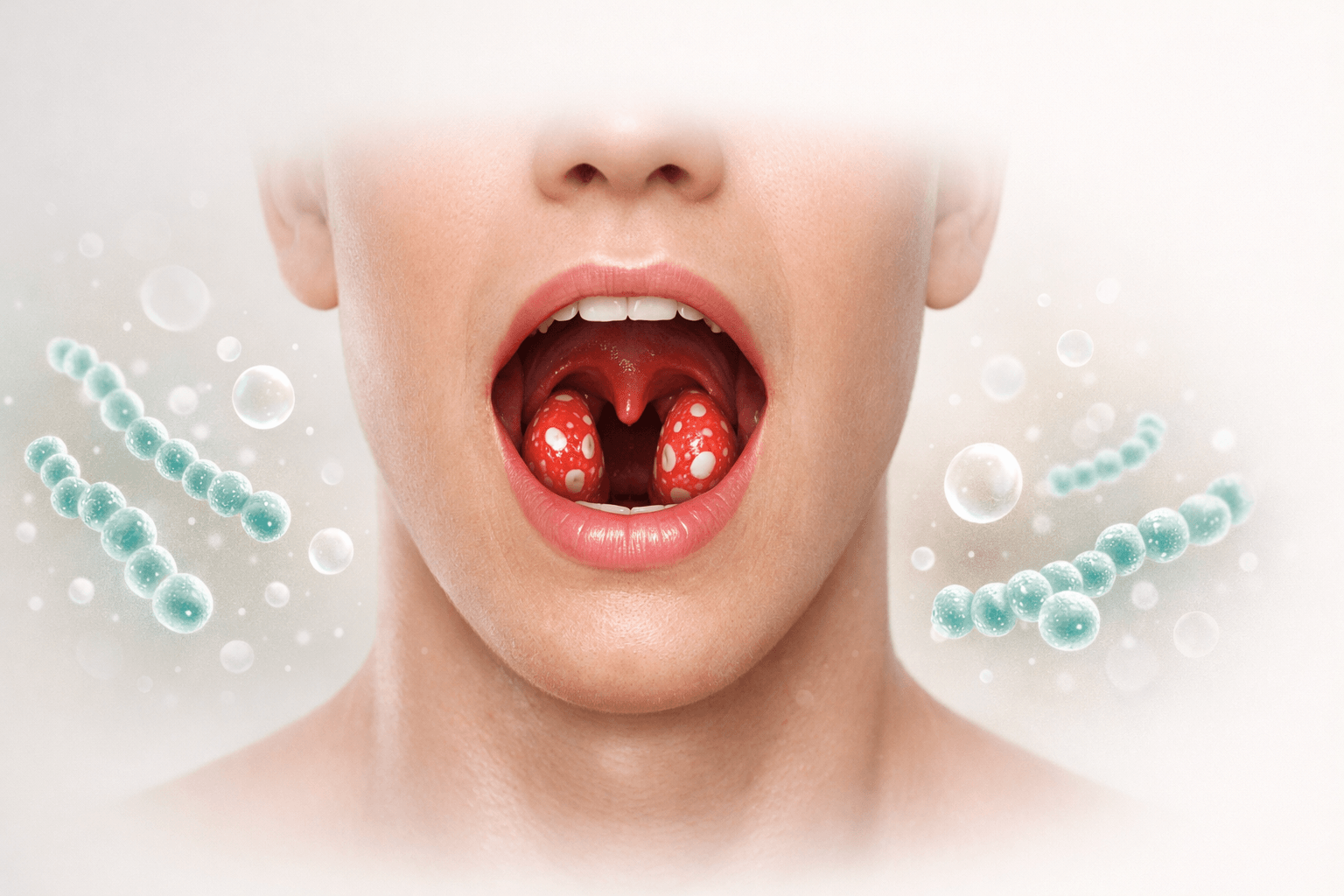
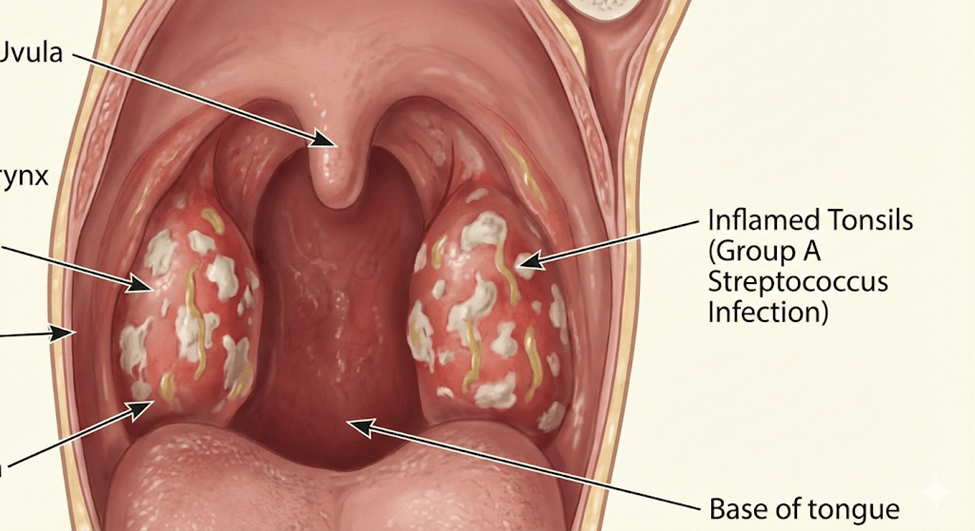
Strep throat is a bacterial infection caused by Group A Streptococcus bacteria (Streptococcus pyogenes). Unlike the common cold or flu, which are viral, strep is strictly bacterial. This distinction is vital because viruses do not respond to antibiotics, whereas strep throat requires them to prevent serious complications like rheumatic fever.
While anyone can get strep throat, it is statistically most common in children and teens between the ages of 5 and 15. However, adults are far from immune. You are particularly susceptible if you are in frequent contact with children or work in crowded environments like schools, military barracks, or offices.2
Viral vs. Bacterial Sore Throat
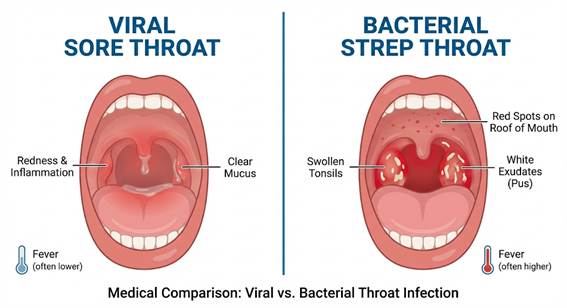
Distinguishing between a viral sore throat and Strep can be tricky, but there are key differences:
Viral: Usually accompanied by a cough, runny nose, hoarseness, and conjunctivitis (pink eye).
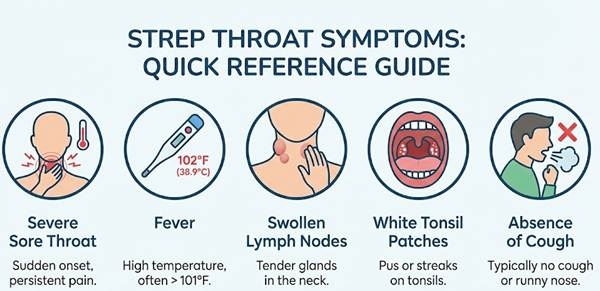
Strep (Bacterial): Usually sudden onset, very painful, and often without a cough. It may present with fever, swollen lymph nodes, and tonsillar exudates (white patches).3
How Does Strep Throat Spread?
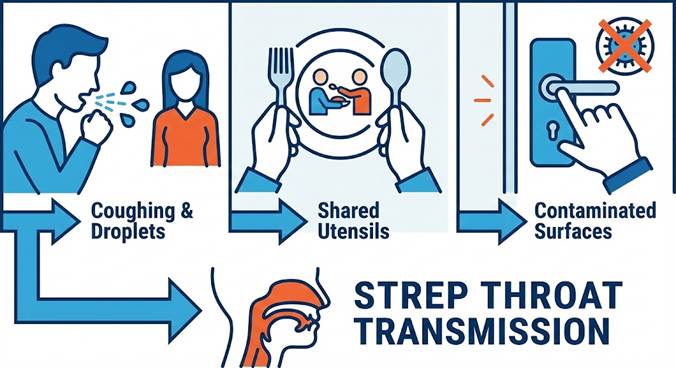
Group A Strep bacteria are highly contagious and colonize the nose and throat of infected people. The spread happens easily through three primary channels:
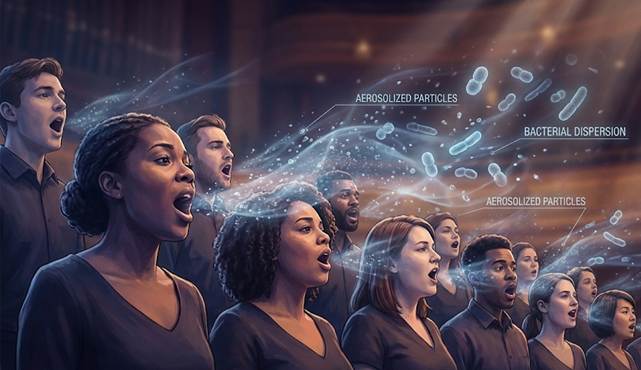
1. Respiratory Droplets (The “Choir” Effect)
When an infected person coughs, sneezes, or even talks, microscopic droplets containing the bacteria are launched into the air. Inhaling these can cause infection.
Case Study: The transmission potential of S. pyogenes via aerosols is potent. A famous “super-spreader” event involving a choir in Skagit Valley (though primarily analyzing COVID-19) highlighted the physics of respiratory pathogens: vigorous vocalization like singing projects infectious particles further than speaking. Similar dynamics apply to Strep, making environments like choir practices or busy classrooms high-risk zones.4
2. Direct Contact
Sharing water bottles, utensils, cups, or towels transfers saliva directly. Kissing is a near-guaranteed way to transmit the bacteria during the contagious window.
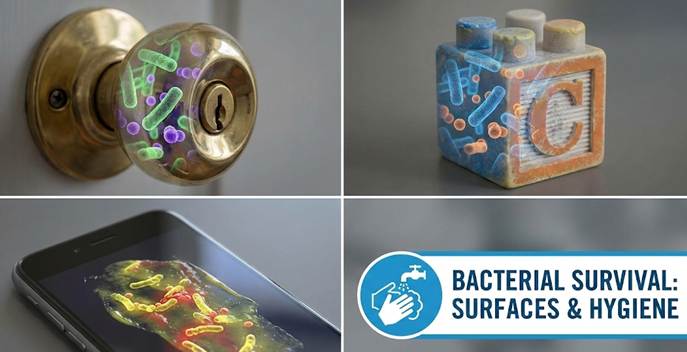
3. Contaminated Surfaces (Fomites)
Although less common than direct contact, fomites (inanimate objects) play a role. Research indicates that S. pyogenes exhibits remarkable resilience, capable of surviving on dry inanimate surfaces for 3 days to 6.5 months depending on humidity and temperature.6 Touching a contaminated doorknob, toy, or phone and then touching your nose or mouth can lead to infection.
How Long Is Strep Throat Contagious?
This is the most critical question for parents and patients. The answer depends entirely on whether or not you are receiving medical treatment.
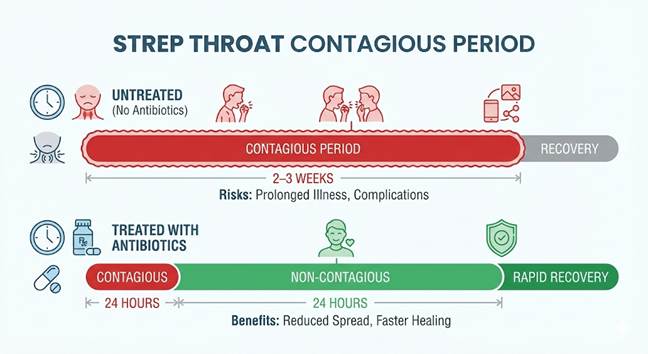
1. Without Antibiotics
If left untreated, strep throat does not just go away quickly. An untreated person can remain contagious for 2 to 3 weeks, even if their symptoms seem to be improving spontaneously.8 During this entire window, they are a risk to everyone around them and risk developing complications.
2. With Antibiotics
Medical intervention dramatically shortens the window of contagion. Once a patient starts an appropriate course of antibiotics (like Amoxicillin or Penicillin):
They generally stop being contagious after 24 hours of the first dose.
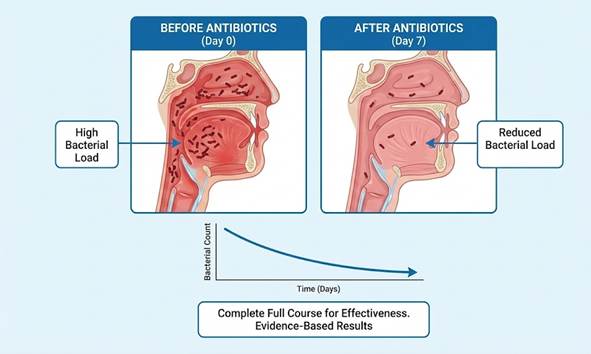
The Research: A meta-analysis of culture conversion rates found that 24 hours after starting antibiotics, only 6.9% of patients still had detectable bacteria in their throat. By day 2, this dropped further to 5.4%.8
Condition: This assumes they are also fever-free.
Important Note: Even though you are not contagious after 24 hours, you must complete the full course of antibiotics. Stopping early can allow the bacteria to persist, potentially causing a relapse or leading to antibiotic resistance.9
When Is the Risk of Spreading Highest?
You are most likely to infect others during the acute phase when symptoms are most severe, but transmission often begins before you even realize you have strep.
The Incubation Period: The time between catching the bacteria and showing symptoms is usually 2 to 5 days.10 You can be contagious during the latter part of this period.
Close Quarters: The risk is significantly amplified in close-contact environments. Classrooms, daycares, college dorms, and military barracks are breeding grounds because people live and breathe in close proximity.
Symptoms That Indicate Active Infection
How do you know if it’s strep and not just a cold? Look for these specific signs, often summarized by doctors using the Centor Criteria3:
Sudden, severe sore throat: It often comes on quickly, not gradually.
Pain when swallowing (Dysphagia).
Fever: Usually $101^\circ\text{F}$ ($38.3^\circ\text{C}$) or higher.
Swollen lymph nodes: Tender lumps in the front of the neck (anterior cervical adenopathy).
White patches or streaks of pus: Visible on red, swollen tonsils (tonsillar exudates).
Tiny red spots: On the roof of the mouth (petechiae).
Absence of cough: This is a key indicator. If you are coughing, sneezing, or have a runny nose, it is statistically more likely to be a virus.3
When Can You Return to School or Work?
The general medical rule for returning to public life is the “24-Hour Rule.”
You can safely return to school or work when BOTH of the following are true:
You have been on antibiotics for at least 24 hours.10
You have been fever-free for 24 hours without the use of fever-reducing medications (like ibuprofen or acetaminophen).
If the patient still feels lethargic or unwell, it is best to rest for another day to aid recovery, even if they are no longer contagious.
Why Treating Strep Early Is Important
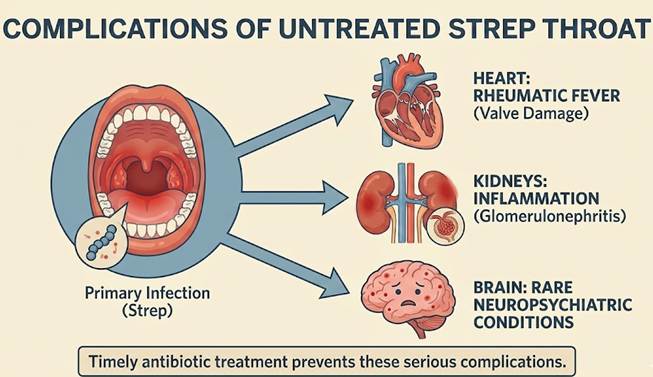
Treating strep is not just about ending the pain; it is about preventing serious, life-altering sequelae. Group A Strep can cause complications if the bacteria spread to other parts of the body or trigger an autoimmune reaction.
Potential complications include:
Rheumatic Fever: A serious inflammatory disease that can damage the heart valves and joints. Historically, this was a leading cause of death in children. Literature often reflects medical history; the tragic decline of the character Beth March in Little Women is widely attributed to complications from Scarlet Fever/Rheumatic Fever, illustrating the devastation this pathogen caused before antibiotics.11
Post-Streptococcal Glomerulonephritis: Inflammation of the kidneys that can lead to kidney failure.10
Abscesses: Pockets of pus around the tonsils (peritonsillar abscess) that may require surgical drainage.
PANDAS: Pediatric Autoimmune Neuropsychiatric Disorders Associated with Streptococcal Infections. This is a condition where a strep infection triggers sudden onset OCD, tics, or severe anxiety in children, believed to be caused by “molecular mimicry” where antibodies attack the basal ganglia.13
How to Prevent Spreading Strep Throat
If you or a family member has strep, take these steps immediately to break the cycle of transmission:
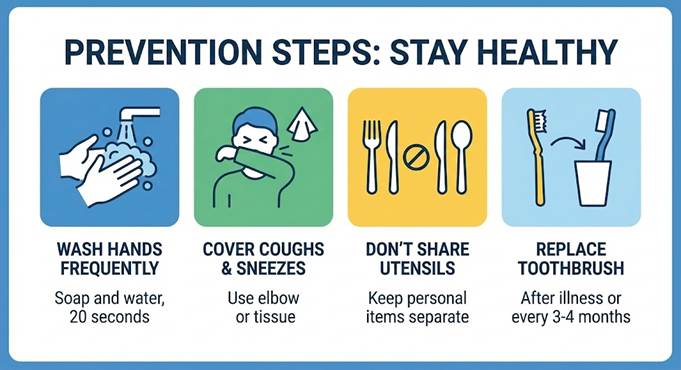
Strict Hand Hygiene: Wash hands frequently with soap and warm water for at least 20 seconds.
Isolate Utensils: Do not share glasses, forks, or plates. Wash infected dishes in hot, soapy water or a dishwasher.
Cover Up: Cough or sneeze into your elbow, not your hands.
The Toothbrush Rule: Throw away your toothbrush after you have been on antibiotics for 24 to 48 hours. Research confirms that toothbrushes can retain pathogenic bacteria, including Streptococci, for days. In one study, toothbrushes used by patients with oral disease became heavily contaminated, potentially serving as a reservoir for re-infection.
Laundry Disinfection:S. pyogenes can survive on fabrics. Research on hospital laundry protocols suggests that washing textiles at $60^\circ\text{C}$ ($140^\circ\text{F}$) or higher is necessary to ensure thermal disinfection of bacteria.15
When to See a Doctor
Sore throats are common, but you should see a doctor if:
The sore throat lasts longer than 48 hours.
It is accompanied by a high fever ($>101^\circ\text{F}$).
You have difficulty breathing or swallowing.
You experience recurrent sore throats (meeting the “Paradise Criteria” for tonsillectomy considerations, such as 7 episodes in one year).16
A rough, sandpaper-like rash develops on the body (which indicates Scarlet Fever). Incidence of Scarlet Fever has been rising in recent years, making vigilance important.18
Myths vs. Facts
Myth
Fact
“Strep isn’t contagious once I feel better.”
False. Without antibiotics, you are contagious for 2–3 weeks, regardless of how you feel. You need 24 hours of antibiotics to drop the bacterial load significantly.8
“Only kids get strep throat.”
False. While most common in ages 5–15, adults frequently catch it, especially parents and teachers. Roughly 5-15% of adult sore throats are Strep.2
“I can just wait it out.”
False. While symptoms may fade on their own, the risk of heart (Rheumatic Fever) or kidney complications remains high without antibiotic treatment.10
“The family dog keeps giving us Strep.”
False. There is no credible evidence that pets are a reservoir for Group A Strep. Research indicates dogs carry Strep. canis, which is distinct from the human pathogen.19
“Going out with wet hair causes Strep.”
False. Strep is caused by bacteria, not cold air. While some studies suggest cold air can impair nasal immune responses, you cannot get a bacterial infection simply from wet hair without exposure to the bacteria.
Frequently Asked Questions (FAQ)
Q: Can strep throat spread without a fever?
A: Yes. While fever is a common symptom, it is possible to carry and spread the bacteria without having a high temperature. Asymptomatic carriage (carrying the bacteria without symptoms) occurs in approximately 12% of children, and these individuals can still serve as reservoirs for the bacteria, though they are generally less contagious than symptomatic patients.21
Q: Is strep throat contagious through kissing?
A: Yes, very much so. Saliva is a primary carrier of the bacteria. You should avoid kissing until the 24-hour antibiotic window has passed and you are fever-free.
Q: Can pets catch strep throat?
A: It is extremely rare for pets to catch Group A Strep from humans. A study presented at a research symposium tested 201 dogs and found zero positive samples for Group A Strep, concluding that dogs are unlikely to serve as reservoirs for the disease.20
Q: Do I really need to throw away my toothbrush?
A: Yes. Studies on toothbrush contamination show that toothbrushes can retain microorganisms (including Streptococci) and support their survival, especially in moist environments. Replacing the brush 24 hours after starting treatment prevents re-introducing the bacteria into your mouth.
Q: Can I get strep throat again right after having it?
A: Yes. Infection does not provide total immunity because there are multiple strains of Group A Strep. Furthermore, “ping-pong” transmission can occur within households if family members are asymptomatic carriers or if surfaces (like toothbrushes) are not managed.
Conclusion
Strep throat is more than just a pain in the neck—it is a highly contagious bacterial infection that requires responsible management. The difference between a 3-week contagion window (untreated) and a 24-hour window (treated) is massive for your family, your workplace, and your community.
If you suspect strep, get a rapid test. It takes minutes, saves days of pain, and protects those around you from serious complications. Stay healthy, wash your hands, and don’t skip those antibiotics!
Frequency of Group A Streptococcus Infection and Analysis of Antibiotic Use in Patients with Pharyngitis—A Retrospective, Multicenter Study – NIH, accessed January 10, 2026, https://pmc.ncbi.nlm.nih.gov/articles/PMC11510161/
Similar environmental survival patterns of Streptococcus pyogenes strains of different epidemiologic backgrounds and clinical severity – NIH, accessed January 10, 2026, https://pmc.ncbi.nlm.nih.gov/articles/PMC7087737/
Time to negative throat culture following initiation of antibiotics for pharyngeal group A Streptococcus: a systematic review and meta-analysis up to October 2021 to inform public health control measures – PMC – NIH, accessed January 10, 2026, https://pmc.ncbi.nlm.nih.gov/articles/PMC10103550/
Effect of a Widespread Reduction in Treatment Duration for Group A Streptococcal Pharyngitis on Outcomes Including Household Transmission – NIH, accessed January 10, 2026, https://pmc.ncbi.nlm.nih.gov/articles/PMC12207974/
Synthesia Sciences is a forward-thinking company dedicated to developing high-quality nutraceuticals and food supplements under the Synthesia brand name. Founded with a commitment to science-backed formulations, the company prioritizes research, innovation, and the use of premium ingredients to support health and wellness.Synthesia Sciences stands out in the industry by focusing on purity, efficacy, and transparency, ensuring that all products are free from harmful additives, artificial colors, and preservatives. By leveraging cutting-edge scientific advancements and adhering to strict quality control standards, the company aims to provide customers with supplements that promote a healthier lifestyle.
Meta Description: Yoga vs Gym which is better for you? Discover a complete 2025 comparison of benefits, drawbacks, expert opinions, and personalized tips to choose your best fitness path.
Understanding the Role of Supplements in Your Health What Are Supplements Meant to Do? Supplements are designed to fill nutritional gaps, support bodily functions, and...